
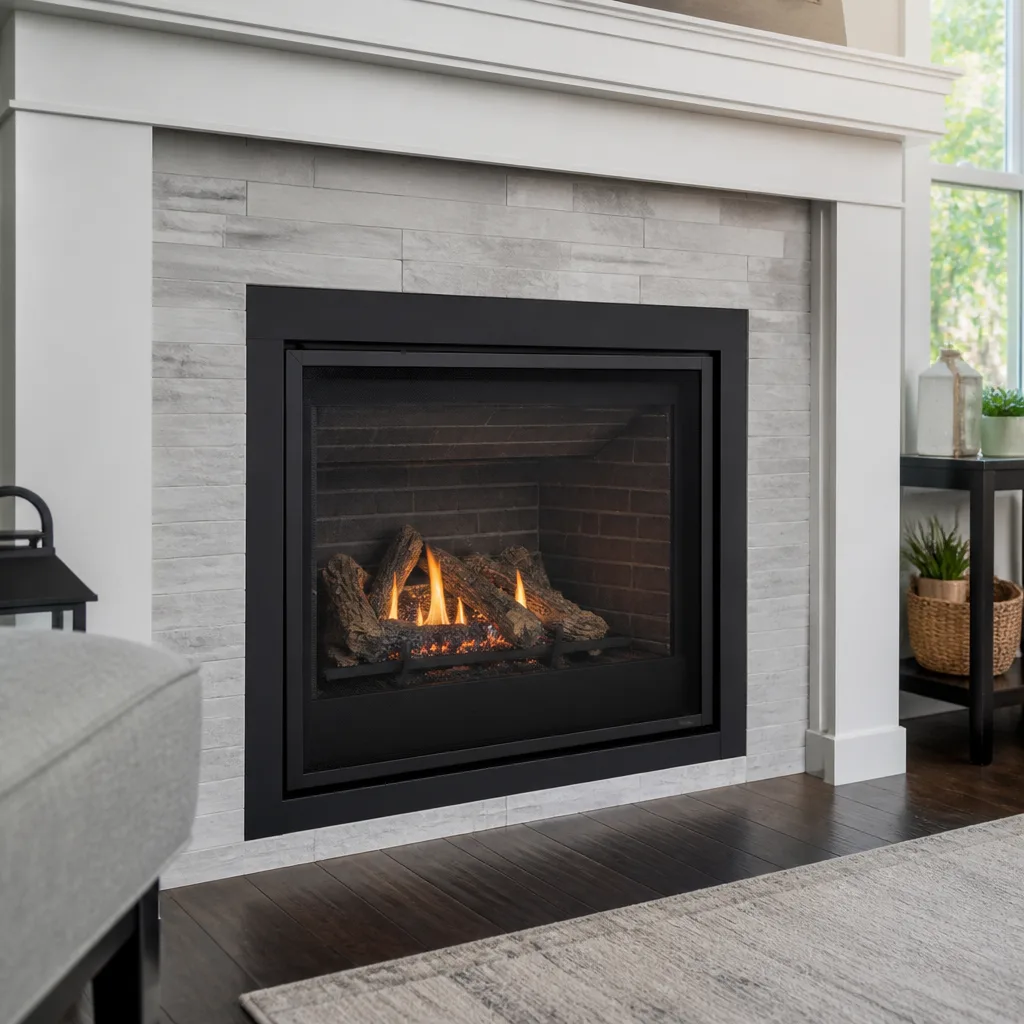
 Gas fireplace service
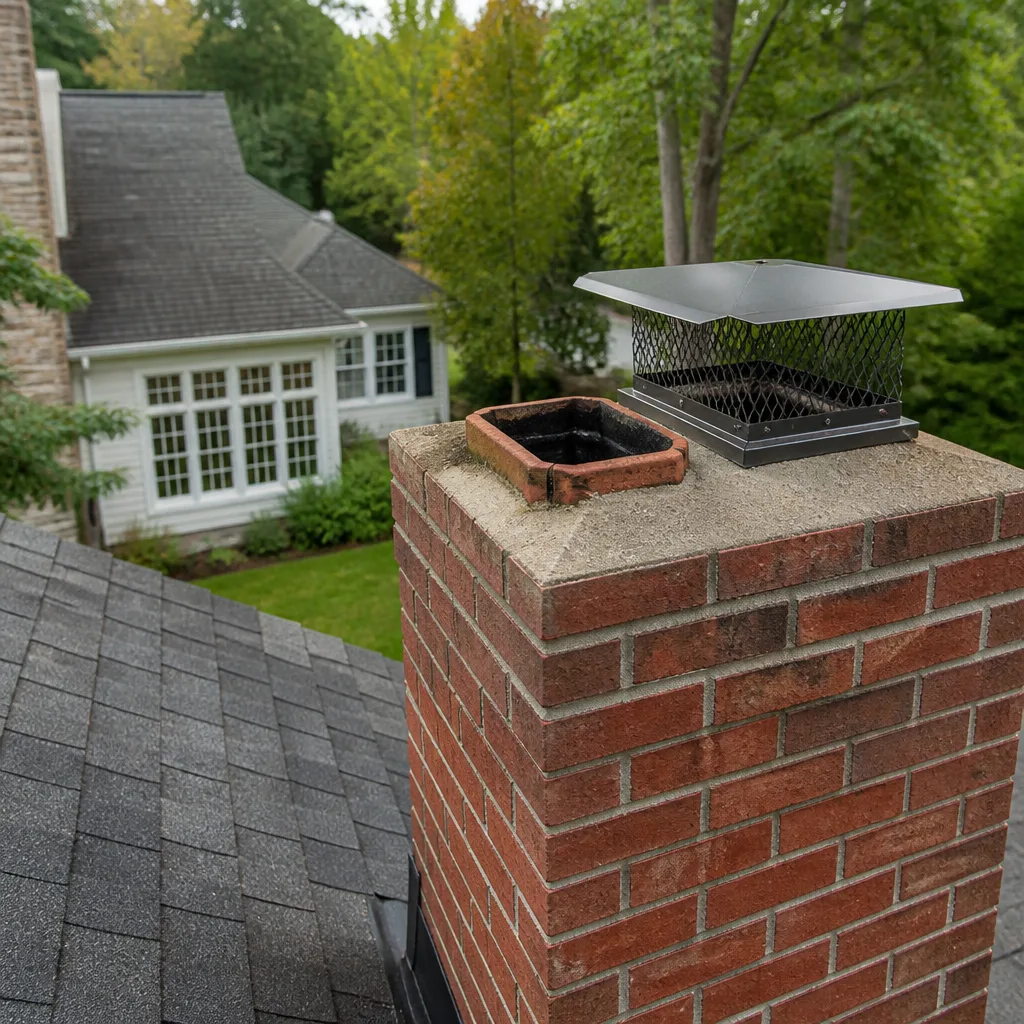 Sweep & inspection
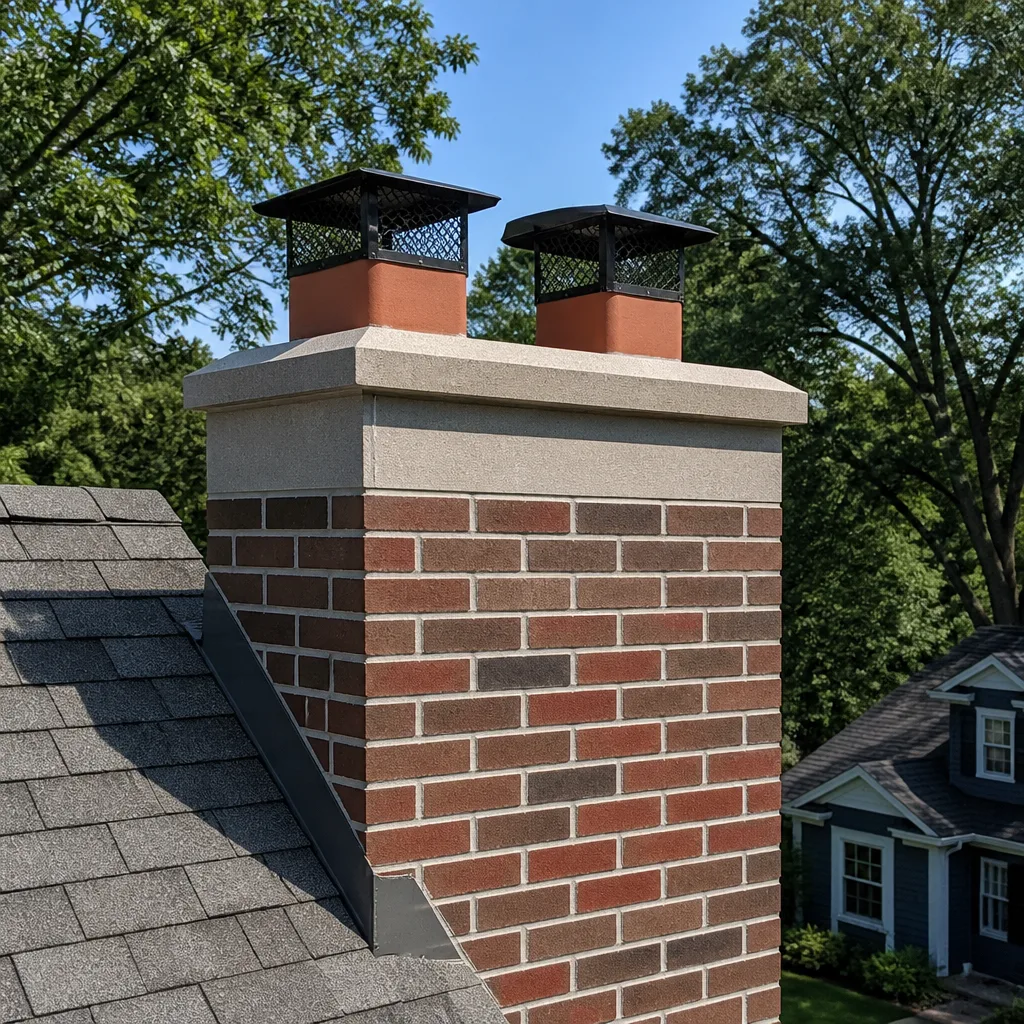 Caps & crowns
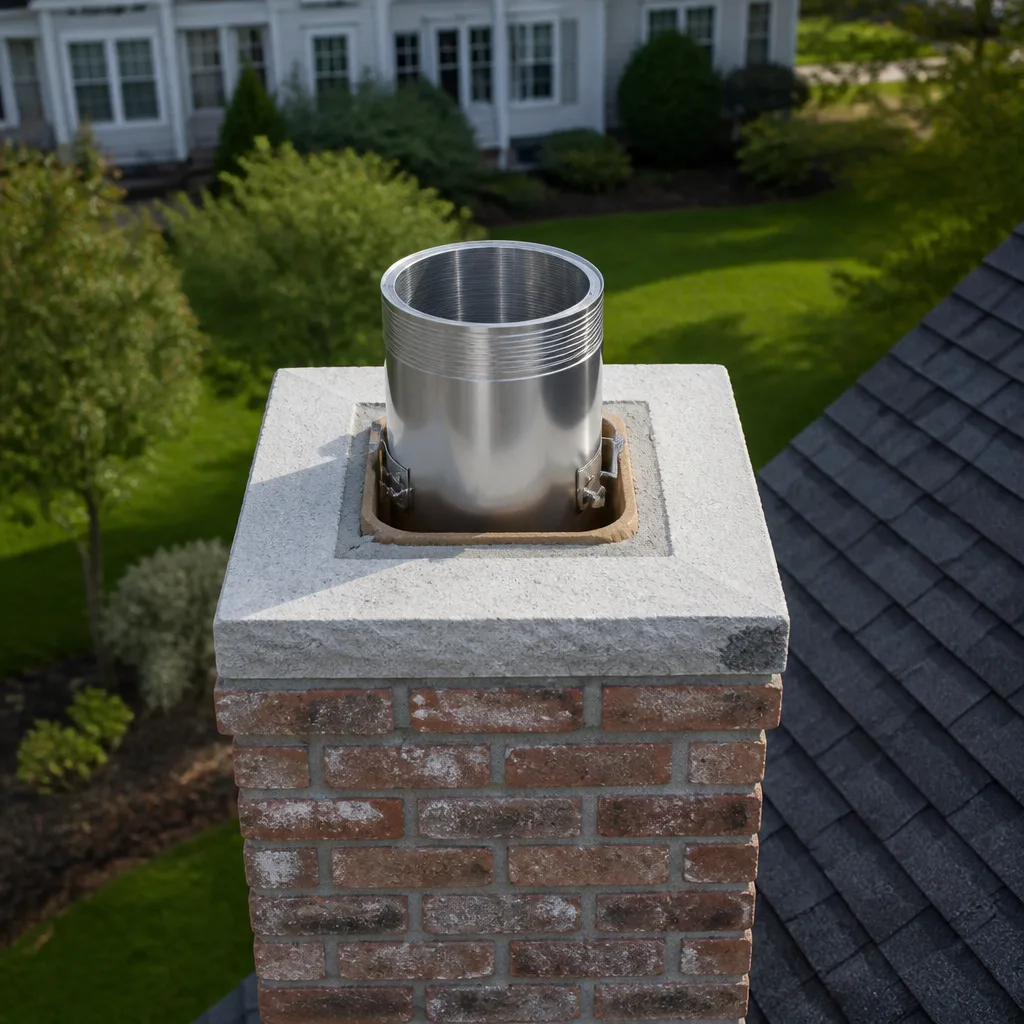 Flue relining
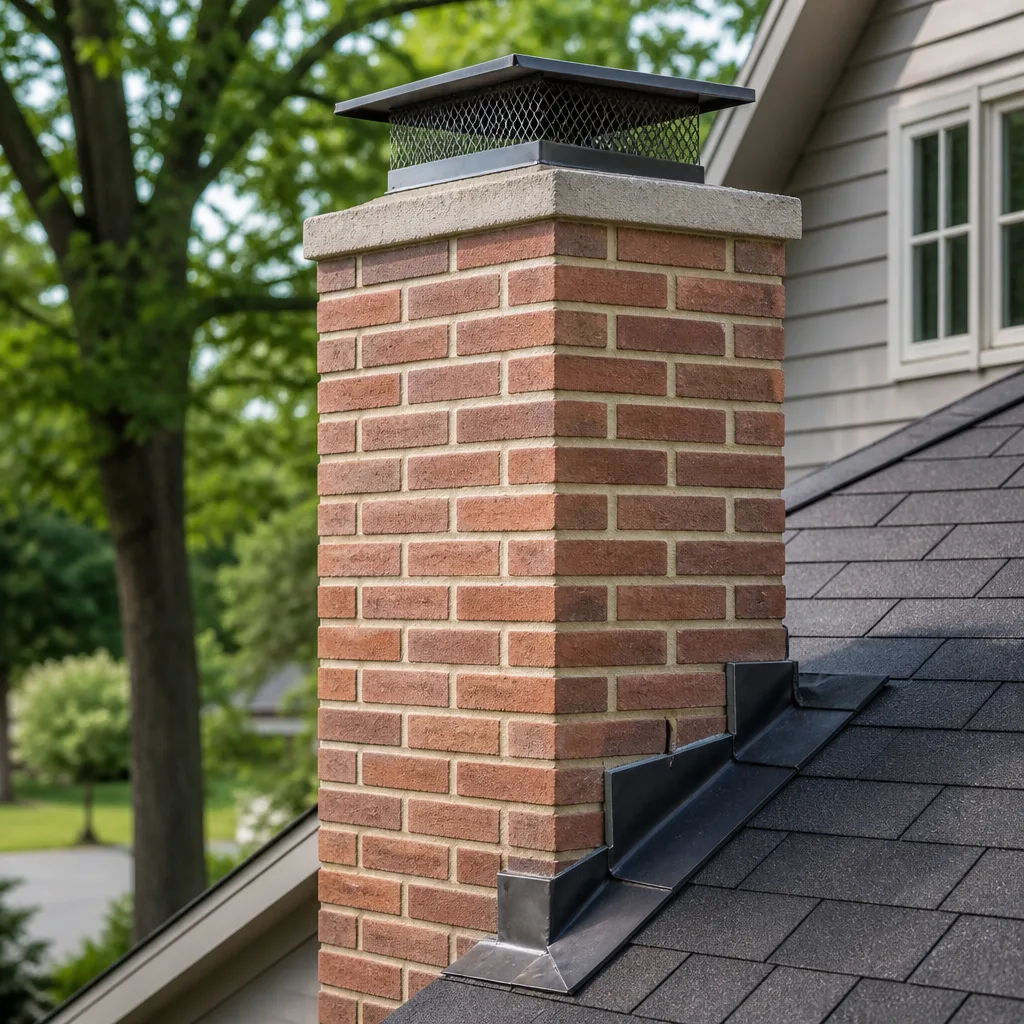 Masonry repair
Level 1 sweep and inspection to the NFPA 211 annual standard - flue, crown, cap, and flashing checked and photographed
Chimney sweep logs do not sweep chimneys. They loosen some creosote - which then falls where a brush and vacuum still have to collect it.
Why Hesperia Homeowners Choose HeatShield Chimney Cleaning
We provide independent HeatShield chimney cleaning, repair, and restoration service in Hesperia, and our crews work on HeatShield-restored fireboxes more often than most sweeps in the High Desert ever see. What sets our HeatShield work apart is that we don’t just sweep the flue above it: we inspect the ceramic coating, the armor panels, the joint compound, and the firebox base for the specific failure patterns Hesperia’s climate creates, then fix what we find. Chimney Sweep Hesperia is not affiliated with or authorized by HeatShield. We’re an independent chimney service, but our technicians are trained on the actual HeatShield repair system and we use genuine HeatShield materials where they fit the job.
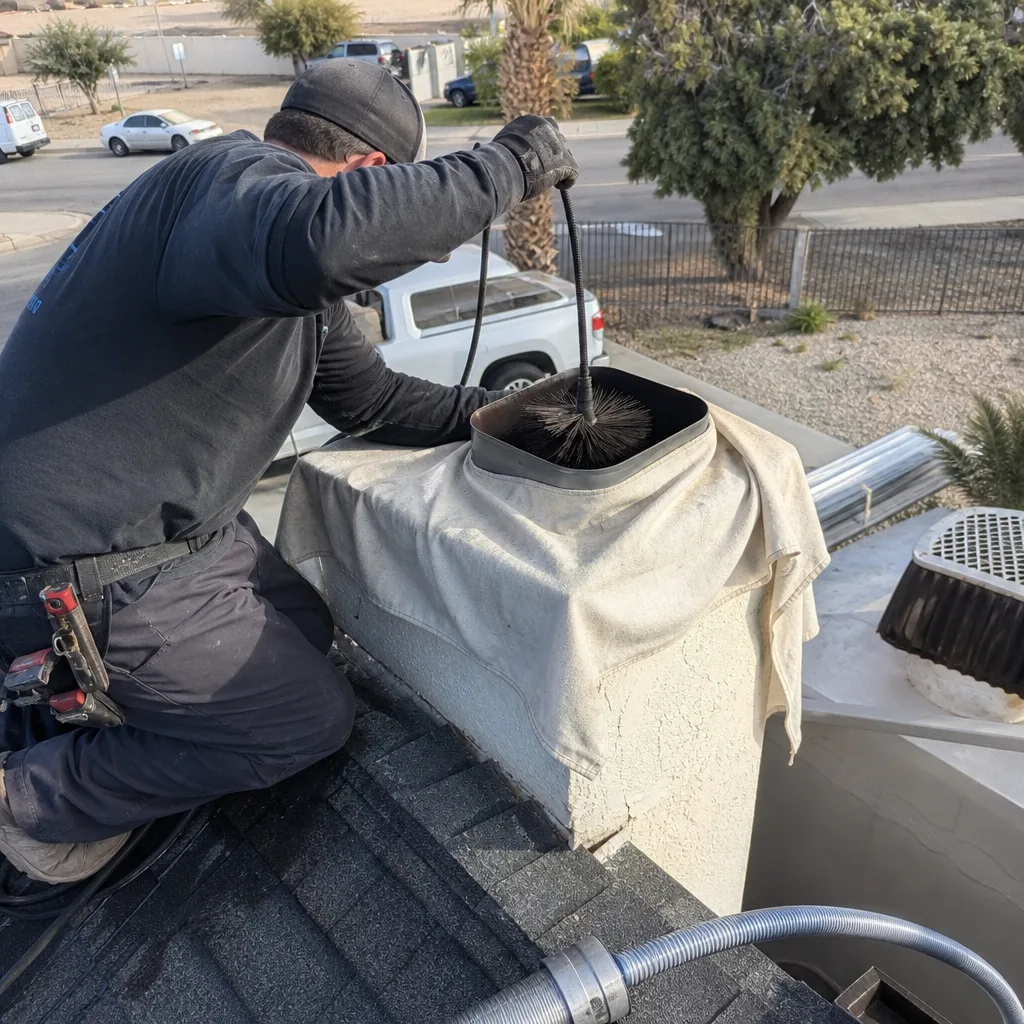
If you have a HeatShield-coated firebox or a HeatShield-armored insert surround that’s cracking, spalling, or pulling away at the seams, call us at (855) 382-8016 for a straight answer and a free estimate.
Why Trust Chimney Sweep Hesperia for Your HeatShield Chimney Cleaning?
HeatShield is not a product most general handymen stock, and it’s not something a discount sweep who runs a brush through and leaves will know how to evaluate. The ceramic glaze coatings are Cerfractory-based, which means they cure and behave differently than standard refractory mortar. They expand and contract at different rates than the firebox brick behind them. In Hesperia’s low-humidity summers, when daytime temperatures push past 90°F and the overnight temperature drops thirty degrees, that differential stress is exactly what causes hairline cracking. You have to know what you’re looking at to tell the difference between cosmetic crazing and a coating that’s about to let go.
Noel Carraway, our owner, has lived in Hesperia’s Ranchero Village area long enough to remember when half the streets out there were still unpaved. He picked up the fundamentals of heating systems and ventilation at Victor Valley College in nearby Victorville, then spent years working chimneys hands-on before going out on his own. He’s the guy local homeowners call when they want a straight answer about whether that HeatShield coating can be repaired or needs to come out entirely. He doesn’t oversell. When we tell a Hesperia homeowner their HeatShield firebox is worth saving, it’s because we’ve seen the actual condition of the firebox, the crown, and the flue above it, and we’re confident in the repair.
We’re fully insured and bonded, and we carry contractor-grade materials: HeatShield, DuraFlex, and Gelco products are on our trucks when we roll into Hesperia neighborhoods from the mesa to the east side. Contractor-grade materials, not hardware-store shortcuts.
Styles & brands we work with
- Sweep & inspection
- Caps & crowns
- Flue relining
- Masonry repair
- Gas fireplace service
Common HeatShield Chimney Cleaning Problems We Fix in Hesperia
HeatShield products are good products, but the High Desert is hard on them. Here’s what we actually see on HeatShield-restored fireboxes in Spring Valley Lake and across Hesperia, and what causes it:
- Ceramic glaze coatings that dry out and hairline-crack in low-humidity summers. HeatShield ceramic glaze is a Cerfractory-based coating, and it’s designed to flex with the firebox. But Hesperia’s humidity routinely sits in the teens during summer, and a coating that can’t hold residual moisture will shrink and develop micro-cracks. Once cracks open up, the underlying firebox mortar is exposed to direct flame and starts to powder. We see this on wood-burning fireboxes that run hard from November through March, then bake all summer.
- HeatShield armor panels debonding at the seams after repeated thermal cycling on wood-burning inserts. Armor panels are installed in sections with seams between them. Every fire cycle expands and contracts the panel, and after a few seasons of heavy burning, the seam sealant starts to pull away. In Hesperia, where wood stoves and inserts are used as supplemental heat all winter, this cycling is more aggressive than in a mild coastal climate. A debonded seam lets heat and smoke get behind the panel, which accelerates the failure.
- HeatShield joint compound shrinking away from the firebox throat when cured too fast. The joint compound needs to cure at a controlled rate. When it’s applied in a hot, dry Hesperia summer and the homeowner fires up the fireplace too soon, the outer layer cures while the inner layer is still soft. That shrinkage pulls the compound away from the throat and leaves gaps that leak smoke into the room. We see this most often on repair jobs where a previous contractor didn’t control the cure time.
- HeatShield-restored fireboxes re-spalling along the base after years of chimney water intrusion through a cracked crown. This is the big one, and it’s a specifically Hesperia problem. A cracked chimney crown lets rain and snowmelt drip down the flue and into the firebox base. HeatShield materials are not waterproof, and constant moisture breaks the bond between the coating and the masonry below. The coating looks fine from the top, but the base is spalling underneath. By the time the homeowner sees white powder on the hearth, the firebox base has already been compromised for a season or two.
- HeatShield fireplace insert surrounds and deco panels warping or discoloring from wind-blown desert dust baked onto hot surfaces. Hesperia’s spring and fall Santa Ana events blow fine dust and sand into fireplaces, especially when caps are missing or damaged. That dust settles on the HeatShield surround, and the first cold snap bakes it onto the surface. Homeowners sometimes report a “chimney fire” smell that turns out to be exactly this: desert dust scorching off a hot HeatShield panel. It’s alarming, but it’s usually a cap and cleaning issue, not a coating failure.
HeatShield Parts & Our Repair-vs-Replace Approach
We use genuine HeatShield ceramic coatings, HeatShield firebox mortar, ceramic joint compound, and HeatShield armor panels where the firebox geometry and damper assembly call for them. For fast turnaround on Hesperia jobs, we keep a working inventory of HeatShield mortar, joint compound, and ceramic coating on our trucks, along with matched refractory mortar and aftermarket damper hardware for situations where HeatShield products won’t fit.
Here’s the honest part. If a firebox has structural movement, a badly cracked back wall, or a damper assembly that’s rusted through, no coating will save it. We’ll tell you plainly when a firebox reline is worth it and when the fireplace itself should be replaced. We’d rather walk away from a repair check than sell you a HeatShield coating that fails in two seasons because the underlying masonry is shot. When we do recommend replacement firebox work, we install it with the same care, and we back it up with a waterproofed crown so water never undermines the repair again.
If you’re not sure whether your HeatShield damage is repairable, call (855) 382-8016. We’ll give you a straight answer over the phone, and a free on-site estimate if you need one.
Our HeatShield Service Process – Step by Step
- 1
Diagnosis. We inspect the entire system, not just the HeatShield surface. That means looking at the firebox coating or armor panels, the smoke shelf, the flue liner, the crown, and the cap. We look specifically for the Hesperia failure patterns: low-humidity crazing, seam debonding, crown-crack moisture intrusion, and wind-blown dust buildup. We also run a camera up the flue, because most HeatShield failures in this area start with water coming down from above.
- 2
Repair or reline. We remove loose HeatShield glaze, vacuum the firebox thoroughly, and reapply genuine HeatShield mortar and ceramic coating to the joints and surfaces. For armor panel jobs, we reset the panels, reseal the seams, and refit the surround hardware. If the firebox needs a full reline, we use HeatShield products where they fit and DuraFlex flexible liner systems for the flue above.
- 3
Crown coating and cap work. This is the step most HeatShield repairs skip, and it’s the one that determines whether your repair lasts. We patch any crown cracks, apply a waterproof coating, and make sure the cap and spark arrestor are actually keeping wind-driven rain and Hesperia’s spring dust out. No HeatShield repair in this climate is complete without this step.
- 4
Cure and test. We control the cure time for the ceramic coating and joint compound, and we walk you through how long to wait before burning. Then we light a test fire, check the draw, and make sure there’s no smoke pullback at the throat.
- 5
Documentation. We give you a written record of what we found, what we did, and what condition the firebox was in before and after. If you ever sell the house, that paperwork matters.
See the difference
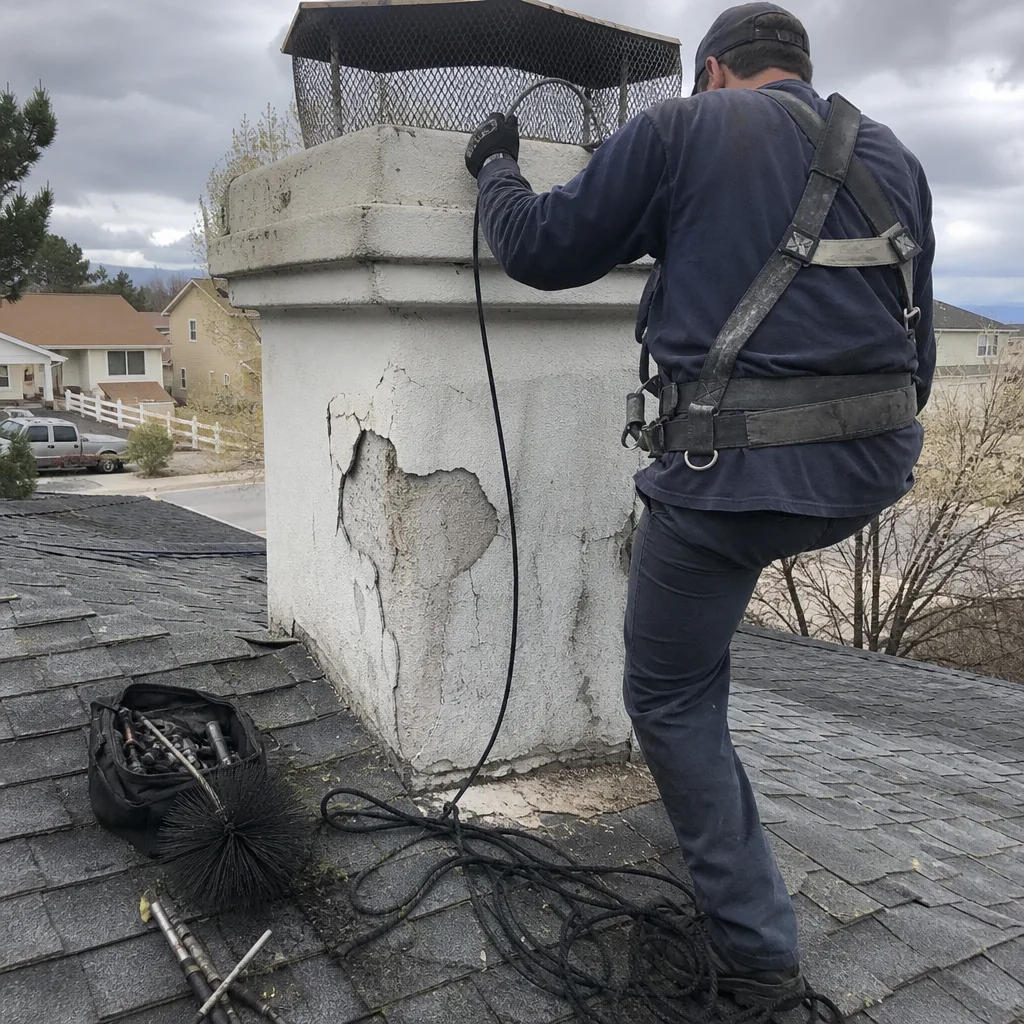 Before
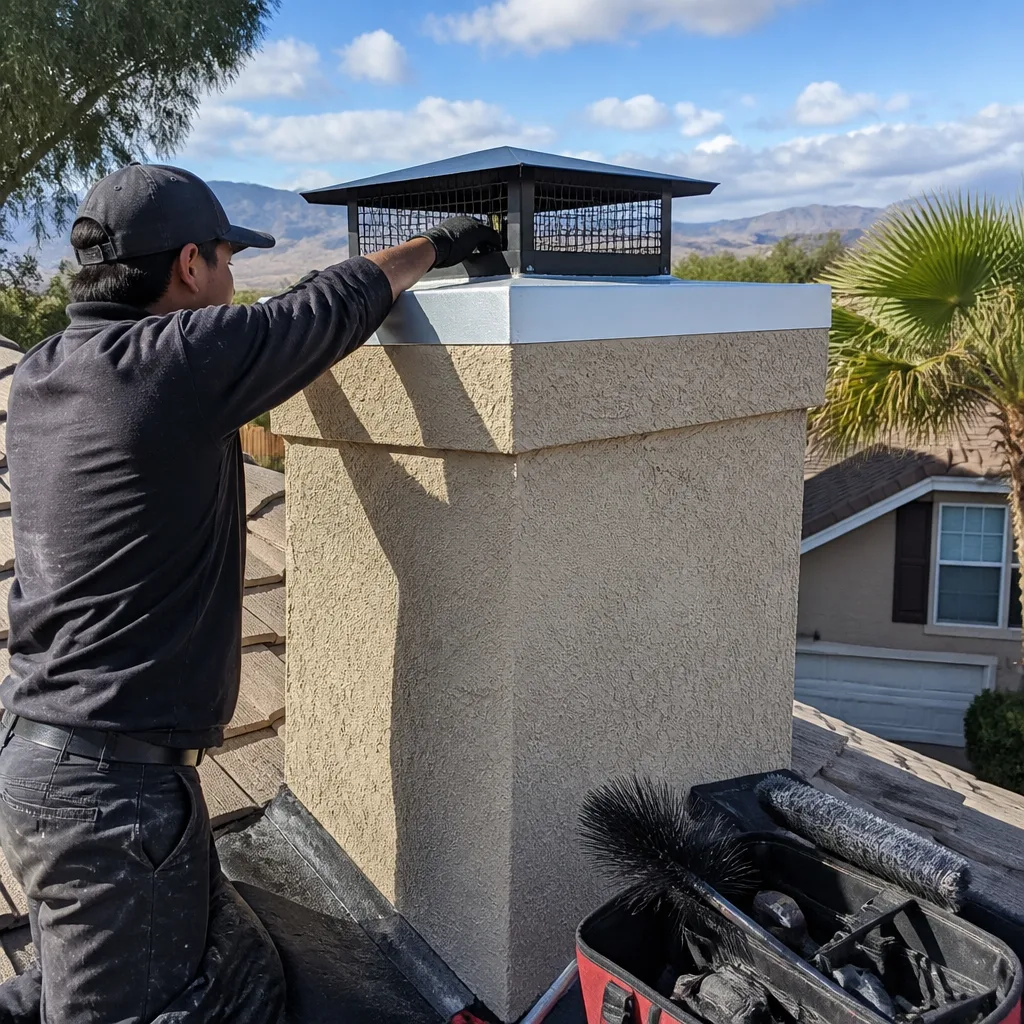 After
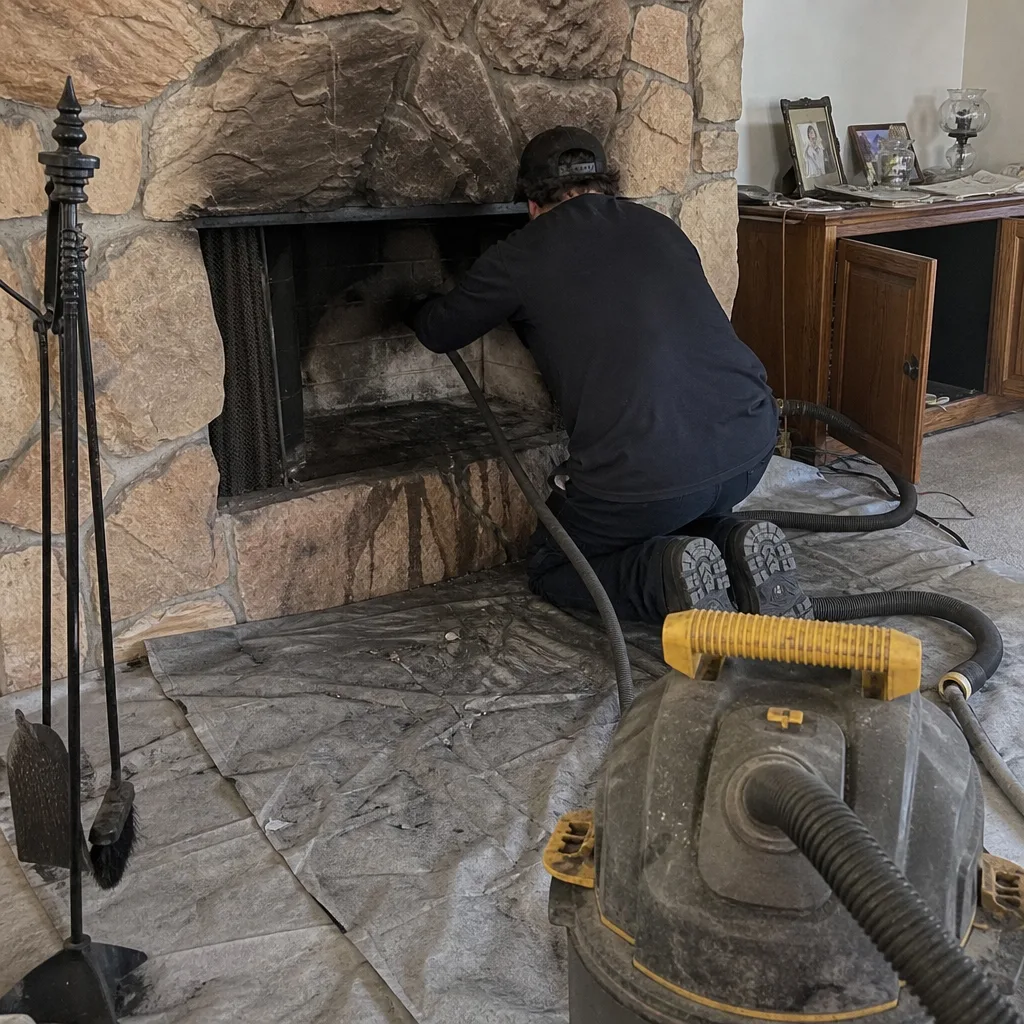 Before
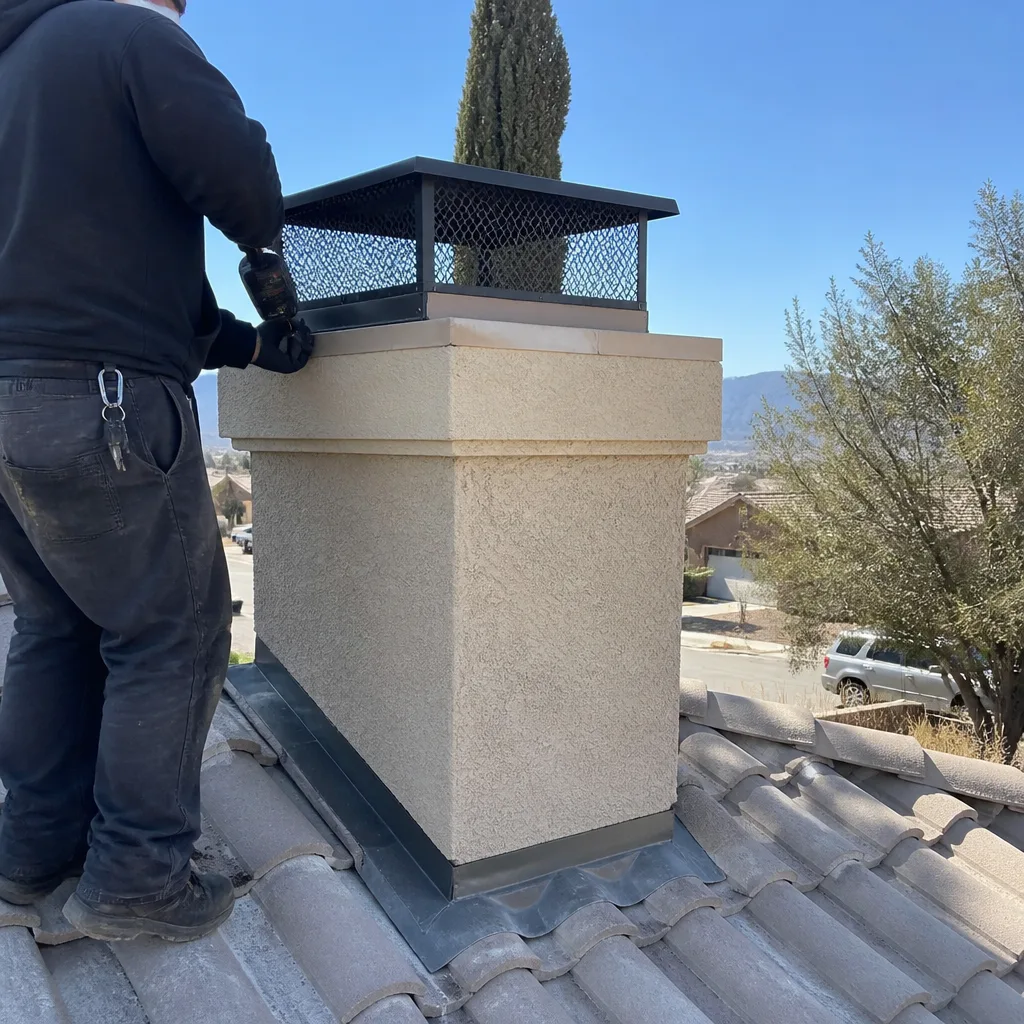 After
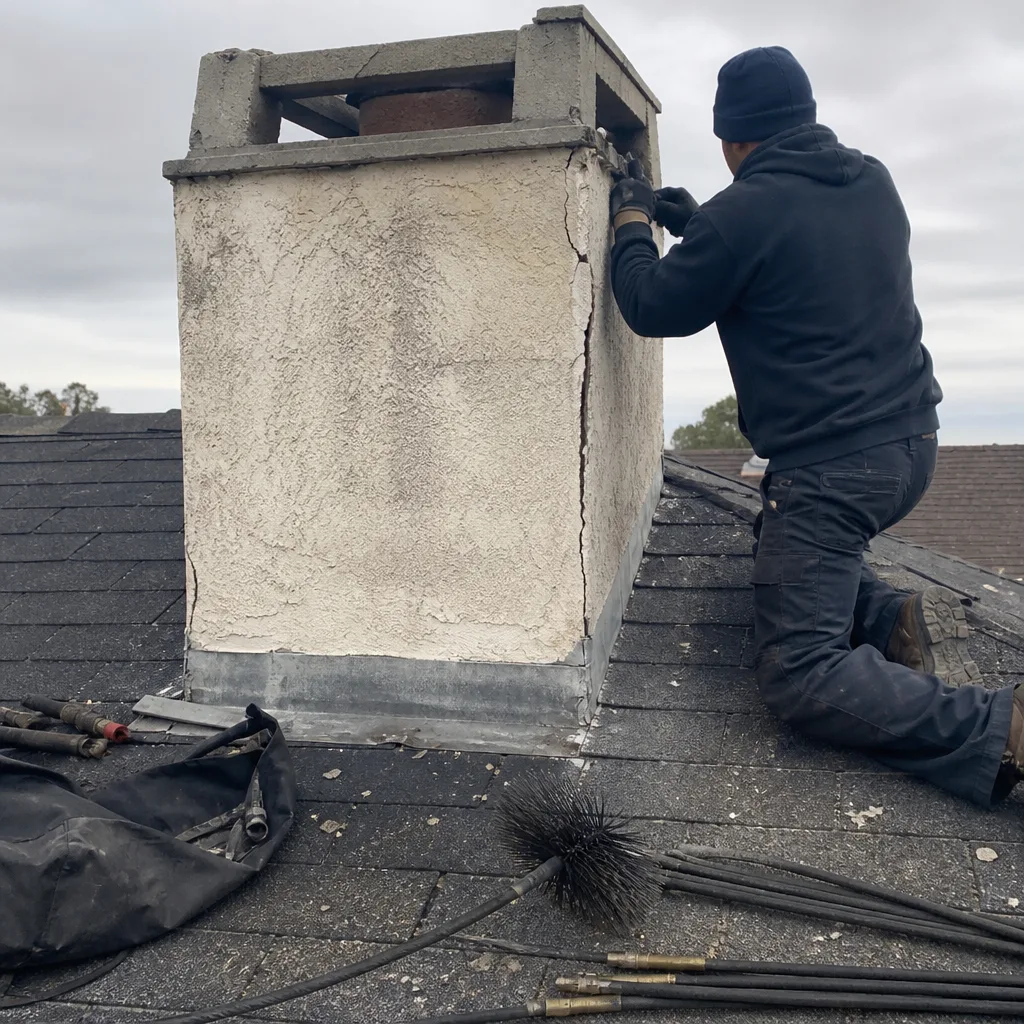 Before
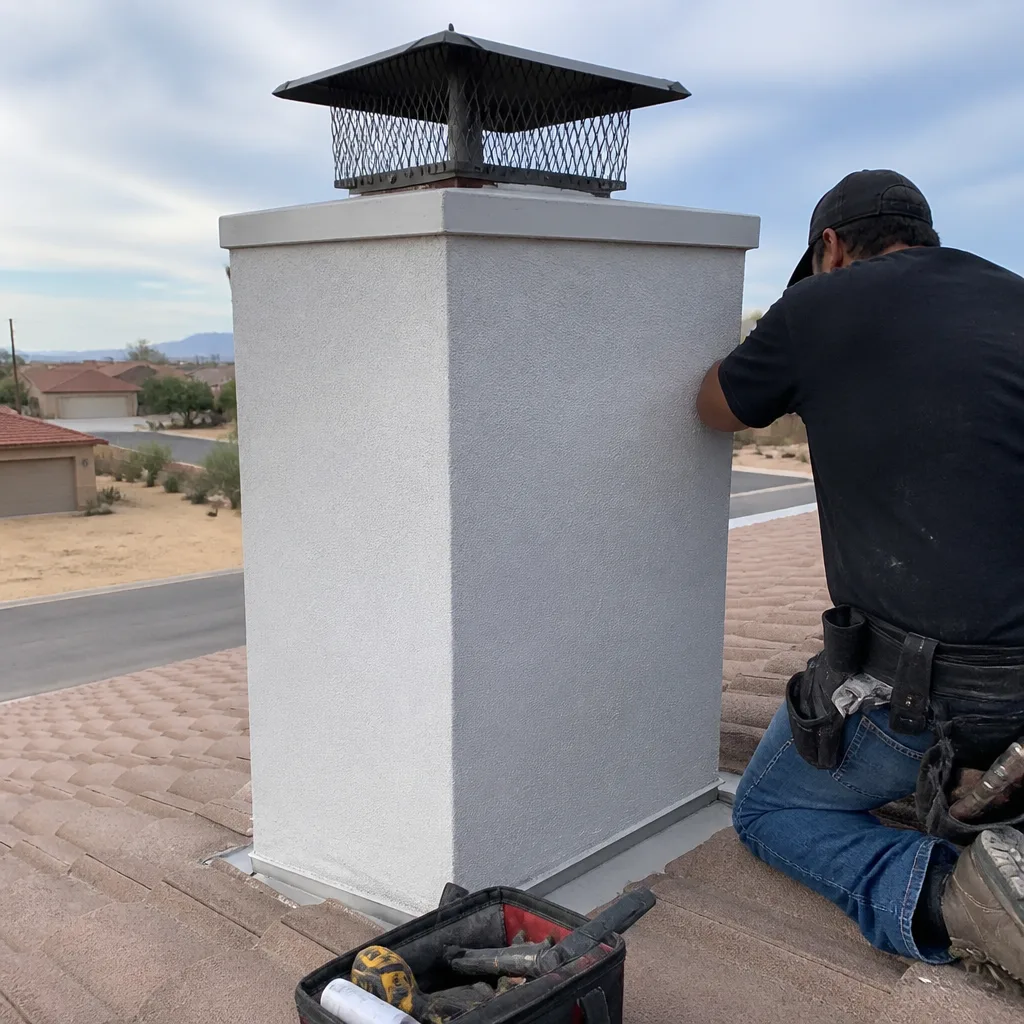 After
HeatShield Products We Service & Install in Hesperia
We service and install the full HeatShield repair system: HeatShield ceramic glaze coatings with the Cerfractory base, HeatShield armor panel systems for firebox relining, HeatShield firebox mortar and ceramic joint compound, and HeatShield fireplace insert surrounds and deco panels. On the flue side, we pair HeatShield firebox work with DuraFlex flexible liners where the flue itself needs relining, and Gelco waterproofing products for crown and masonry protection. We keep a working supply of HeatShield materials on the truck for most Hesperia service calls, which means we can often complete the repair in a single visit rather than ordering parts and coming back.
We Also Service These Brands
HeatShield is a specialty we know well, but we don’t treat it as the only answer. We work across a range of contractor-grade chimney products, including DuraFlex flexible liner systems and Gelco waterproofing and repair products. If your chimney has a mixed system, a HeatShield firebox with a DuraFlex reline above it, we can service the whole thing without pointing you to a second contractor.
FAQs – HeatShield Chimney Cleaning Service in Hesperia
Yes, but the sweep needs to know the coating is there and adjust accordingly. HeatShield ceramic coating is durable, but aggressive wire brushing can gouge it, especially if the coating has already started to craze from Hesperia’s dry summers. We use softer poly brushes on HeatShield-coated fireboxes and flues, and we inspect the coating while we sweep so we catch fresh cracks before they spread. A standard sweep that doesn’t know what to look for can do more damage than good.
The short answer is thermal cycling plus low humidity. HeatShield armor panels expand when heated and contract when they cool. In Oak Hills and Hesperia, winter burning puts a lot of heat into the panels, then summer’s dry, 90°F-plus days pull moisture out and shrink the ceramic material. Repeat that for a few years and the seams start to debond, and hairline cracks open in the coating. The fix is usually resealing the seams and reapplying the ceramic coating, but we always check the crown and cap first, because water intrusion from a cracked crown makes the cracking dramatically worse.
In most cases, yes, but only if the flue above the firebox is also sound. The HeatShield repair restores the firebox and smoke chamber, but if the flue liner above is cracked or missing sections, smoke and heat can still escape into the chimney chase. We inspect the full system before signing off on any HeatShield firebox work. If the flue needs a reline, we’ll tell you that up front and quote the full job, not just the part you called about. Call (855) 382-8016 for an exact quote, estimates are free.
A full firebox rebuild means tearing out the existing firebrick and relaying the entire firebox from scratch. A HeatShield restore keeps the existing masonry and covers it with a ceramic coating or armor panel system. The HeatShield route is less invasive, usually costs significantly less, and can be done in a day or two rather than a full week. It’s not right for every firebox. If the bricks are structurally loose, shifted, or the firebox is pulling away from the hearth, no coating will hold. But for surface spalling, hairline cracks, and minor deterioration, HeatShield is the repair we recommend most often in Mountain View Acres and Hesperia.
Without question. The number one reason HeatShield restorations fail in Hesperia is water getting in through a cracked crown or a missing cap, then working down into the firebox. A properly installed cap with a good spark arrestor also keeps out the Joshua tree seed pods and pine needles that clog Hesperia flues every spring. We include crown inspection and cap work as part of every HeatShield repair, because a HeatShield coating is only as good as the water protection above it. Call (855) 382-8016 if you want us to take a look at your crown and cap before burn season.
HeatShield-specific cleaning and inspection in Hesperia typically runs $180 to $340, depending on the firebox condition, flue height, and whether we need to address any coating touch-up work at the same time. HeatShield firebox repairs start higher, because they involve materials, cure time, and crown or cap work. The only way to know your number is to have us look at the actual firebox. Call (855) 382-8016 for a free estimate, and we’ll give you a straight number before any work begins.
Book Your HeatShield Service in Hesperia, CA
A clean chimney isn’t a luxury, it’s just what stands between a good fire and a bad night. If your HeatShield firebox or coating needs attention, call Chimney Sweep Hesperia at (855) 382-8016 to schedule a free estimate. One call covers cleaning, repair, and venting. We don’t just find the problem, we fix it.
Written by Noel Carraway, Owner at Chimney Sweep Hesperia, serving Hesperia’s High Desert neighborhoods.